
From Nepal to Pakistan: the best mountaineering shifts stage for the summer season

Table of contents
- 1.Nepal closes, Pakistan opens: the handover of the alpine season
- 2.Tahu Rutum (6,651 m): four specialists face the still-unfinished west face
- 3.K7 (6,934 m): the Ragni di Lecco seek a new route on the east pillar
- 4.Featured activities: first ski descent on Ranrapalca (6,162 m)
- 5.FKT on Everest: Tyler Andrews breaks the record via the South Route with supplemental O2
- 6.Final balance from Nepal: more than 1,000 Everest summits and two new Triple Crowns
Nepal closes, Pakistan opens: the handover of the alpine season
With the spring season in Nepal drawing to a close, the focus of elite mountaineering shifts towards the Pakistani Karakoram. It is the logic of the alpine calendar: when the monsoon starts to complicate weather windows in the Nepalese Himalaya, the great granite walls of the Karakoram enter their prime season. And this summer of 2026, the start could not be more interesting.
Two world-class teams are already in Pakistan with objectives that, if successful, will go down in mountaineering history. These are not commercial expeditions or ascents via established routes. They are first-ascent projects on walls that have been waiting for the right climbers for years. The combination of talent, preparation and ambition on the ground is exactly what defines this summer window as one of the most attractive in recent years.
Added to this is the close of a Nepalese season that leaves behind technical headlines and an ethical debate that will not be settled anytime soon: the use of supplementary oxygen in Everest speed records. We also analyse it in this report, with the facts on the table and without filters.
Tahu Rutum (6,651 m): four specialists face the still-unfinished west face
The first team is a clear statement of intent. Siebe Vanhee, Symon Welfringer and Sean Villanueva O'Driscoll — three of the best active big-wall climbers in the world — join Pete Whittaker, a global reference in crack climbing. Four specialists, each in their own domain, facing an objective they have kept under wraps, describing it only as a "Big Wall project".
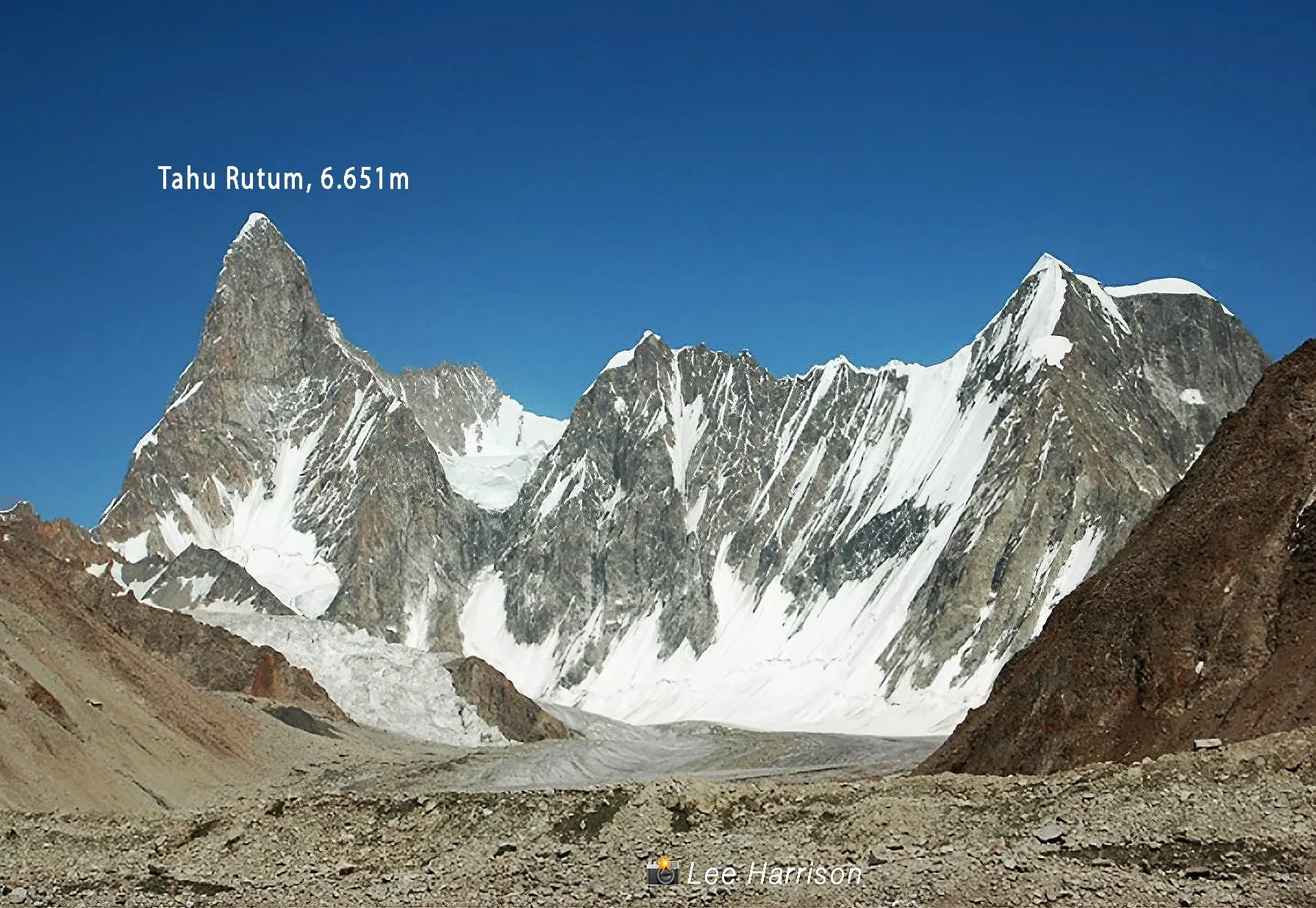
Thanks to information from Ali M. Saltoro (Alpine Adventures Guide), we know that the permit is for Tahu Rutum (6,651 m), on the Biafo Glacier, Karakoram.
The west face of this mountain has a short but significant history. Only Kyle Dempster attempted it solo in 2008, opening a 1,300-metre route with difficulties up to A3 and ice at 60°, without reaching the summit. In an article published in Alpinist, Dempster himself wrote: "Since 2008, every year at least one climber has contacted me asking for information about Tahu Rutum. Several teams have attempted it. When I remember the crack systems and the characteristic granite, I wonder about its potential for free climbing. However, that line on the direct west face remains unfinished."
With the technical level of this quartet, the question is not only whether they will reach the summit: it is whether they will manage to free climb the wall, something Dempster had already pointed to as a possibility years ago. The direct line on the west face is still waiting.
K7 (6,934 m): the Ragni di Lecco seek a new route on the east pillar
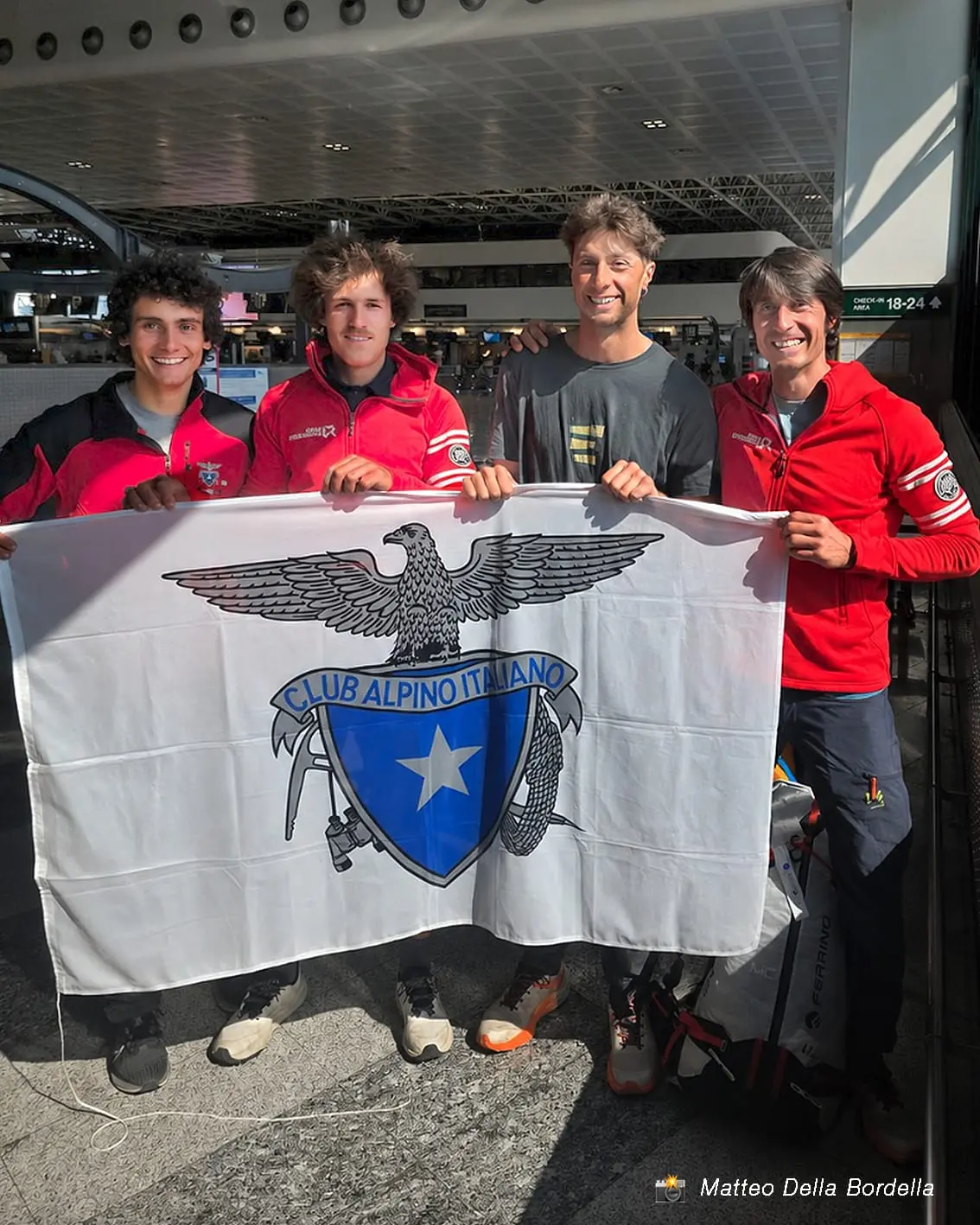
The second project underway this summer is led by the Ragni di Lecco, one of Italy’s most historic and technically accomplished mountaineering groups. The team is led by Matteo Della Bordella, with Giacomo Mauri, Mirco Grasso and Luca Ducoli completing the rope team.
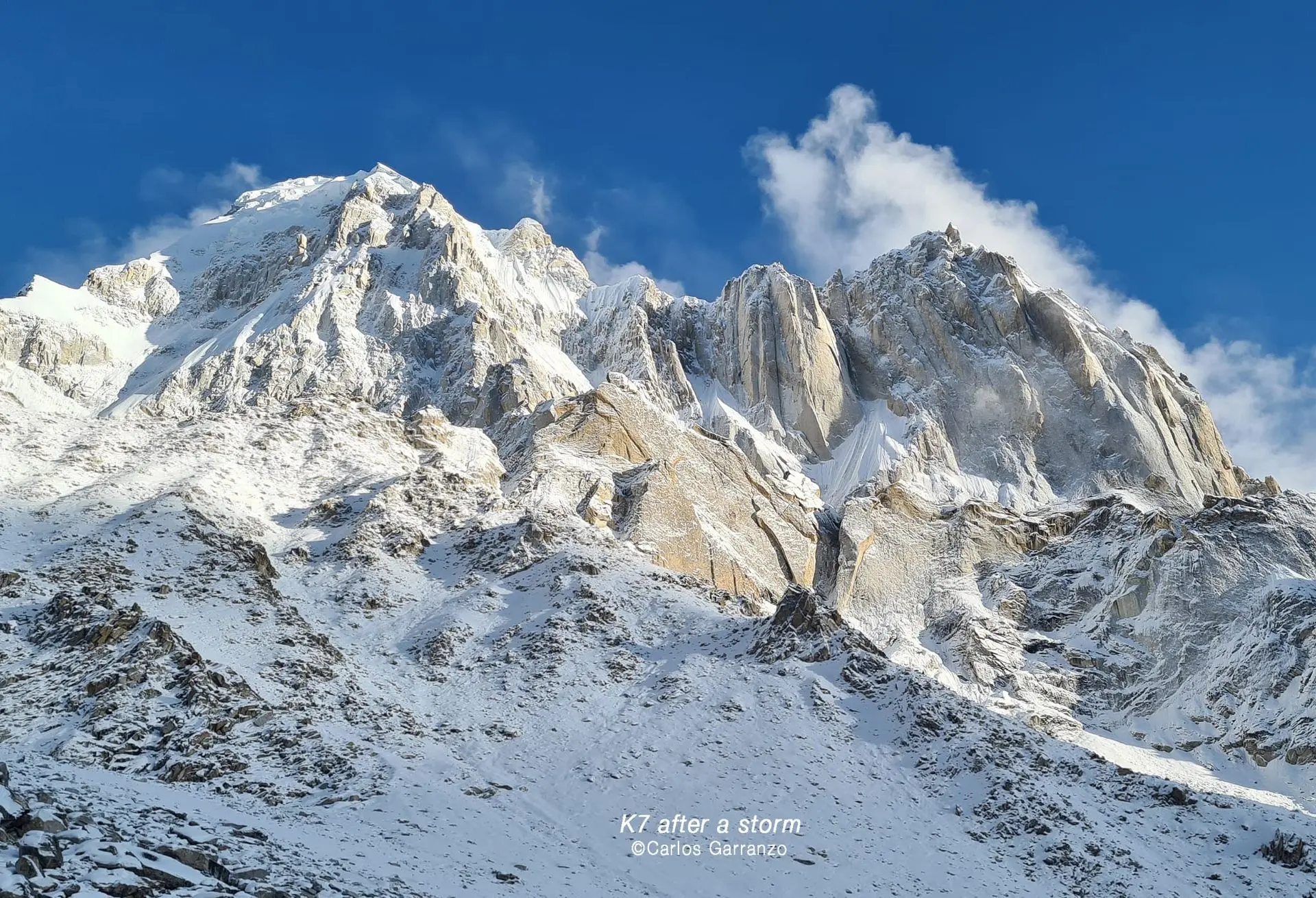
Their objective: to open a new route on the east pillar of K7 (6,934 m), in the Charakusa Valley, one of the most sought-after high-altitude granite areas in the Karakoram. The expedition is sponsored by the CAI (Italian Alpine Club) and they are expected to remain in Pakistan until mid-July.
For Della Bordella, this is not a randomly chosen objective. It is a long-dreamed-of project, for which the team has spent months in specific preparation. The east pillar of K7 is a line with its own character: high exposure, mixed terrain and just enough altitude for every mistake to have consequences. The kind of objective that the Ragni have turned into their signature over decades of mountaineering on big walls around the world.
We will follow the progress of both expeditions as information arrives from the field.
Featured activities: first ski descent on Ranrapalca (6,162 m)
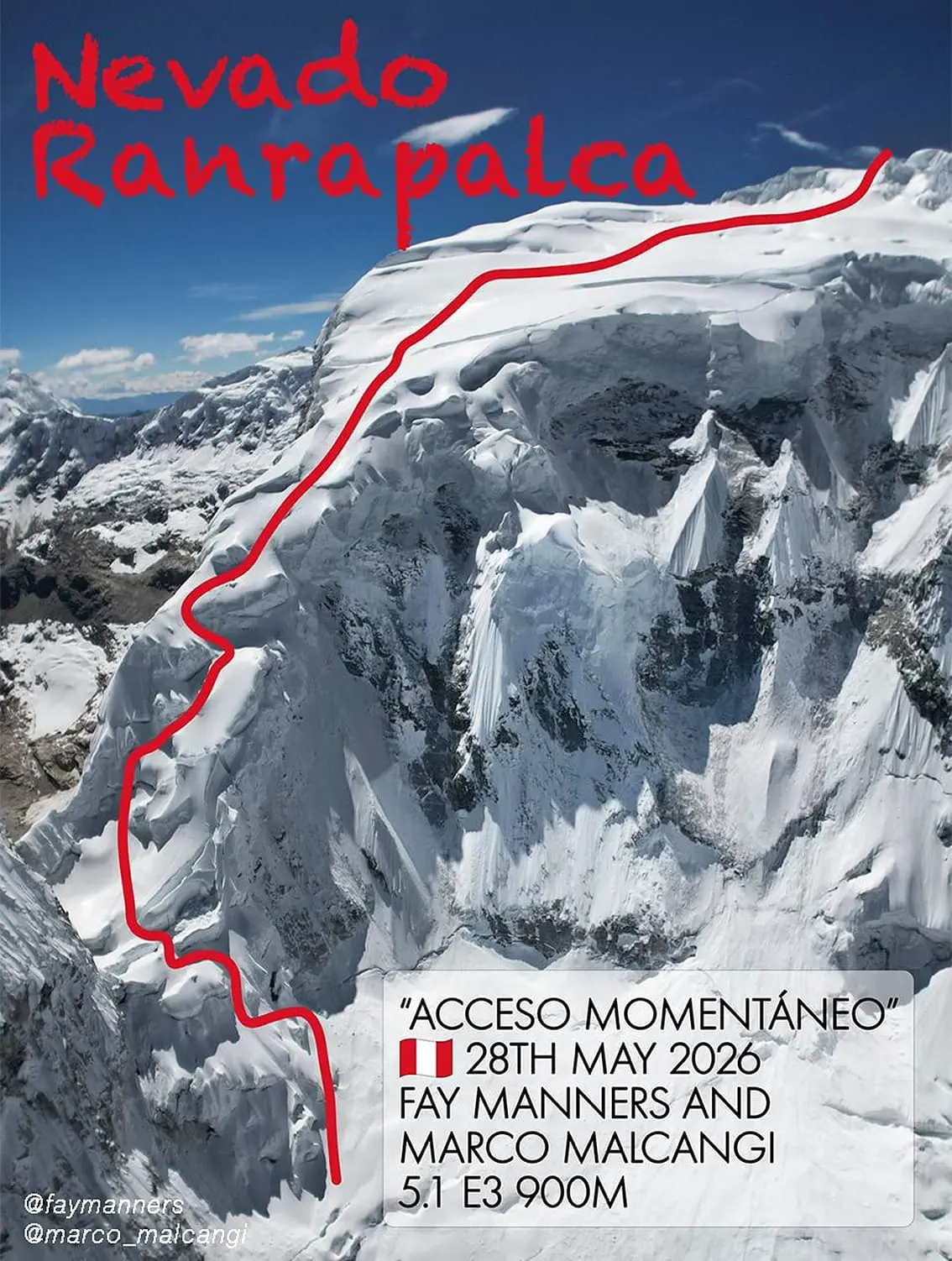
Beyond the expeditions currently underway, this season has also delivered a standout activity in the Peruvian Andes. Fay Manners and Marco Malcangi have completed the first ski descent of Nevado Ranrapalca (6,162 m), in the Cordillera Blanca, Peru.
The chosen descent line also coincides with the first official repeat of the route opened in 1980 by Swiss mountaineers Yves-Claude Sonnenwyl and Pierre Morand, which runs through the north col between Ranrapalca and Ocshapalca.
Two milestones in a single ascent: the first documented skiable descent of this line and the official validation of a 45-year-old route that, until now, had no recorded repeat. Ranrapalca is no minor mountain in the Andean context: its more than 6,100 metres of altitude, the glacier and the exposure of the north col make this descent a high-level ski mountaineering line. A technical achievement that deserves a place in this season’s record of firsts.
FKT on Everest: Tyler Andrews breaks the record via the South Route with supplemental O2
The close of the Nepal season has Tyler Andrews as its main protagonist. After several previous attempts —two in this 2025-26 season alone— he has managed to climb Everest via the South Route in the fastest time in history: 9 hours, 55 minutes and 41 seconds.
The technical data is clear. So is the debate around it: Andrews used supplemental oxygen in both attempts this season, from Camp 2 (6,400 m) at a flow rate of 4 L/min. When asked whether that flow rate is enough, Andrews himself summed it up in a sentence reported by ExplorersWeb: "If you’re going to use gas, why not use the maximum flow rate?".
The guidelines of fastestknowntimes.com —the most widely accepted reference within the FKT community, although it is not an official sport— do not explicitly prohibit O2, but they do not validate it without nuance either. Andrews’ team relies on the assisted category to validate the record.
The debate is not new. The WADA (World Anti Doping Agency) banned O2 in 2007, but lifted the ban in 2010, arguing that in the death zone supplemental oxygen is more a survival measure than an unfair sporting advantage. Everyone can take their own position. What is beyond dispute is that, without supplemental oxygen, only 7 mountaineers reached the summit of Everest this season. Andrews’ record has context, and context matters.

Final balance from Nepal: more than 1,000 Everest summits and two new Triple Crowns
The spring season in Nepal closes with figures that speak for themselves. It is estimated that more than 1,000 mountaineers reached the summit of Everest this season. Far from being a cause for celebration, the figure reflects the current state of the world’s highest mountain as a mass-market commercial product. Without supplemental oxygen, the figure drops to 7. Three of them —Chinese influencer Chunqi Yan, Russian climber Nikol Kovalchuk and a VIP group guided by Nimsdai Purja— reached the summit unexpectedly at the end of the season.
In the Triple Crown category —the three peaks of the Khumbu in a single season: Everest, Lhotse and Nuptse— two new completions have been recorded. Kristin Harila, although she only used O2 on Lhotse, completed the trio. Ngô Hải Sơn with Nima Sherpa also achieved it, both with supplemental oxygen.
The picture left by this season in Nepal is that of an activity that has almost completely lost its sporting dimension on the commercial routes. The contrast with what is now beginning in the Karakoram —two elite teams pursuing unclimbed lines, without oxygen, without networks of fixed ropes— could not be more eloquent.
We will be closely following what happens on Tahu Rutum and K7.